The judges for each challenge include FFZG students, primarily pre-service EFL teachers, followed by FFZG faculty relevant to the respective challenge, and finally native speakers and experts in the relevant domain.
Here are our TEC 2026 judges:
FFZG student judges (pre-service EFL teachers)
Kristina Krakić, Nina Pejnović, Kristina Horki, Željana Lazić, Jana Ajduković, Korina Rubinić, Christian Šilović, Anja Puljak, Lucija Humić, Greta Mikec, Lana Blažinić, Filip Stjepanović, Valentina Petra Eterović Buble, Rujana Tenšek.
FFZG faculty judges
Lada Čale Feldman

Lada Čale Feldman is a Full Professor and Chair of Theatre Studies at the Department for Comparative Literature, Faculty of Humanities and Social Sciences, University of Zagreb in Croatia. Her areas of research are theatre and performance studies, and feminist criticism.
Besides her two co-authored and eight authored books in Croatian – the last one, Molièere ponovljen (Molière repeated), was published in 2025 – she also co-edited several special issues of journals and numerous collections, among which in English (with I. Prica and R. Senjković), Fear, Death and Resistance: Croatia 1991-92, 1993, and (with M. Blažević) Misperformance: essays in shifting perspectives, 2014. She is a recipient of six (five national and one international) awards.
Miro Frakić

Miro Frakić is a film critic and a university lecturer at the Department of Scandinavian Studies. He teaches language courses as well as courses on Scandinavian (and) queer film, and on films for children and young people. He translated the book about Greta Thunberg, Our House Is on Fire, by Malena Ernman, published by Egmont, as well as the Croatian Film Critics’ Association edition, The Show Must Go On!
He is currently preparing a translation of P. Adams Sitney’s book Visionary Film. A great enthusiast of experimental film, he worked for several years as a programme assistant at the Split Film Festival and was a member of the critics’ jury at the 14th edition of the 25 FPS Festival. He received the Vladimir Vuković Award for Best New Critic for 2019. His texts have been published in Filmonaut, Croatian Cinema Chronicle, on the Film Zone portal of the Croatian Film Critics’ Association, and on other platforms. He has participated in several critics’ workshops, including Sarajevo Talents and the Kino Klub Split workshop led by Jonathan Rosenbaum.
Renata Geld
Renata Geld is a Professor of Linguistics and the Founding Director of the Center for Cognitive Science at the University of Zagreb. She leads the first MA program in Applied Cognitive Science in Croatia and the wider region, recognized by national media as “the program of the future”.
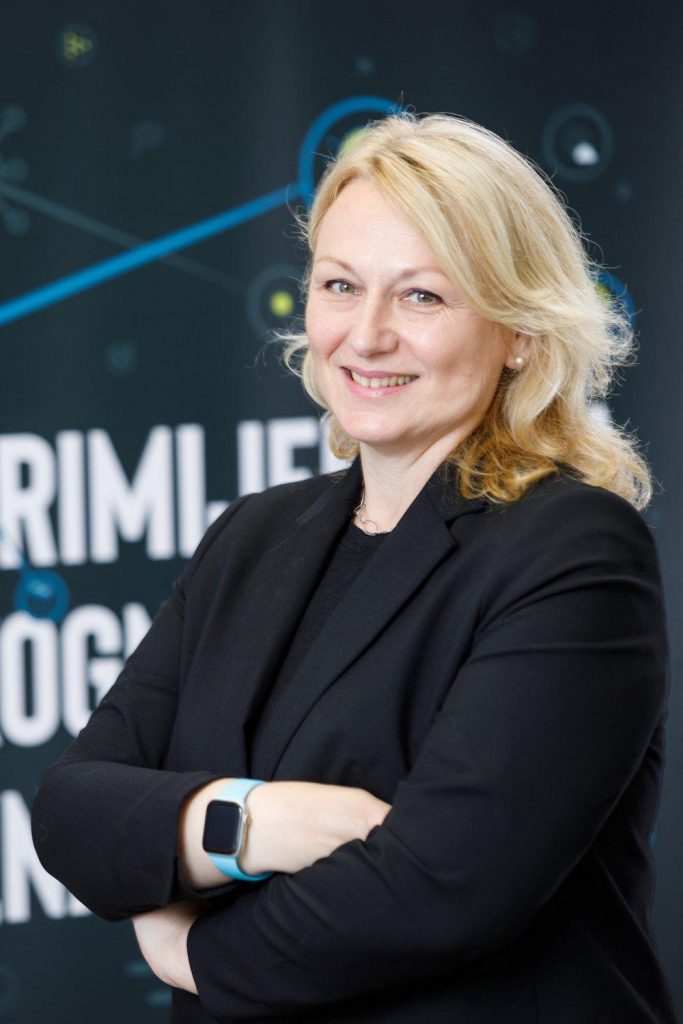
As a cognitive linguist, cognitive scientist, and teacher trainer, she focuses on developing interdisciplinary educational models and creative ecosystems that foster sustainable relations between humans and technology. She also heads the Doctoral Program in Foreign Language Education and remains active in science outreach and child education, including initiatives such as First Lego League.
Matija Ivačić

Matija Ivačić is an Associate Professor at the Department of Czech Studies at the Faculty of Humanities and Social Sciences, University of Zagreb. He has published the scientific monograph Czech Crime Fiction 1958-1969: Reflection, Representation, and a book of literary reviews – Mapping of Gains.
He publishes literary critiques, reviews of Czech literature, and also translates. To date, he has published sixteen book translations as well as numerous translations in literary magazines. He is a member of the editorial board of the scientific journal Književna smotra, and from 2019 to 2025, he was also a member of the editorial board of the literary magazine Artikulacije. He received the “Josip Tabak” award of the Association of Croatian Literary Translators for his translation of Josef Škvorecký’s novel The Cowards (2024).
Nives Kovačić

Nives Kovačić is a research and teaching assistant at the SLA and TEFL section of the Department of English, Faculty of Humanities and Social Sciences in Zagreb. In addition to working with future English teachers, she is a PhD candidate in the Foreign Language Education doctoral program.
She has published several research papers and participated in international workshops, including TEAM (Transdisciplinary Approaches to Learning, Acquisition, Multilingualism, Lund University) and EMLAR (Experimental Methods in Language Research, Utrecht University). Her main interests include cross-linguistic awareness, technology-mediated language teaching, and connecting applied linguistics with everyday classroom practice.
Stela Letica Krevelj
Stela Letica Krevelj is an Associate Professor and the Chair of the SLA and TEFL Section at the Department of English, Faculty of Humanities and Social Sciences, University of Zagreb.
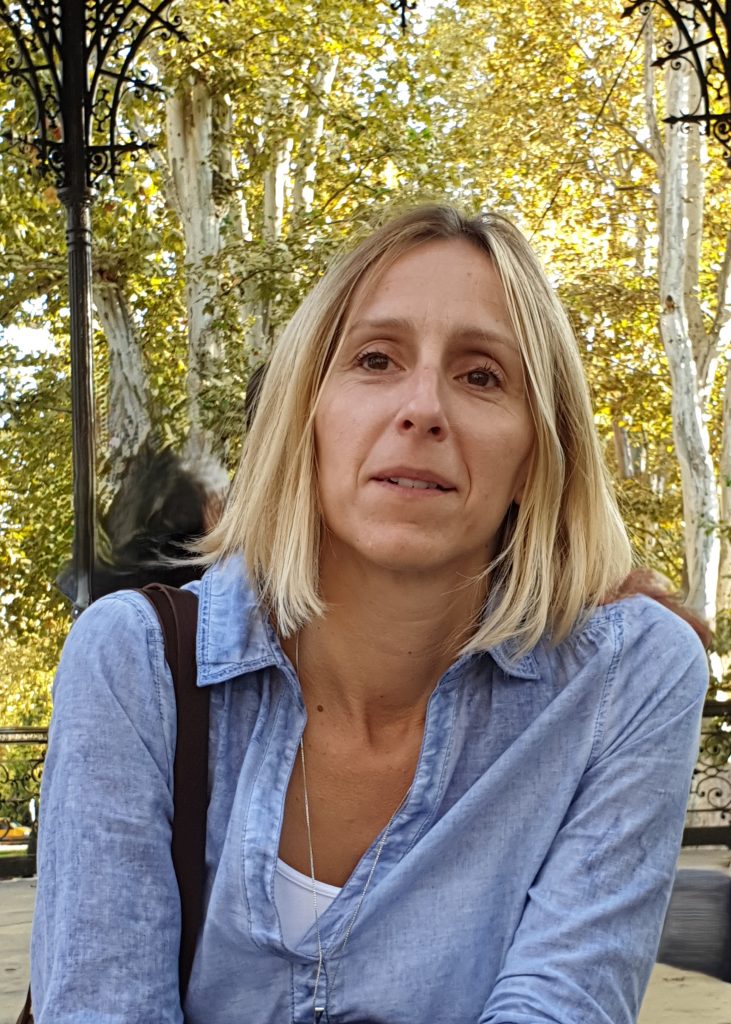
She teaches graduate and postgraduate courses on second language acquisition, multilingualism, and research methodology. Her research focuses on second and third language acquisition, multilingual language development, early (multiple) language education, and research methodology in SLA and TEFL.
With a long-standing interest in how young learners develop communicative competence in and across different languages, she is deeply engaged in initiatives that celebrate learners’ creativity, linguistic growth, and real-world use of English.
Diana Tomić
Diana Tomić is an Assistant Professor and Chair of Applied Phonetics at the Department of Phonetics, Faculty of Humanities and Social Sciences, University of Zagreb in Croatia. Her research areas are speech development, oracy, and oratory.
Her book Public Speaking for Teachers, published in 2024, includes a chapter on Classroom Debate that offers a deeper insight into debating as a learning process.
She served as the Head of Center for Teacher Education (2021-2025), developed two interdisciplinary MA programs (Applied Cognitive Science & Clinical Linguistics and Phonetics), and is currently working on the development of LLE programs.
Hrvoje Tutek
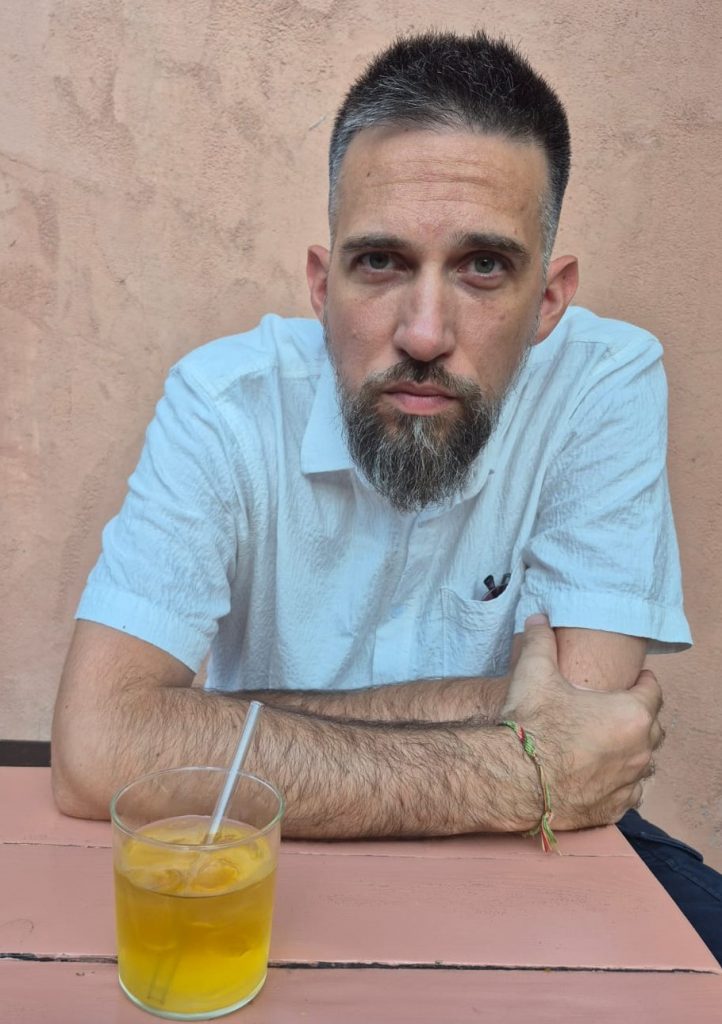
Hrvoje Tutek is a senior lecturer at the Department of English, Faculty of Humanities and Social Sciences in Zagreb. He teaches courses in literary and cultural theory and 20th and 21st-century US literature and social history. His academic work moves between literary theory, sociology of cultural forms, and Marxist theory of value, interrogating the ideological limits to imagination in contemporary culture.
He is an occasional literary translator (Croatian translation of Breece D’J Pancake’s Stories, Edicije Božičević, forthcoming) and an author of several award-winning books of poetry.
External judges (native speakers / experts)
Oscar Avila
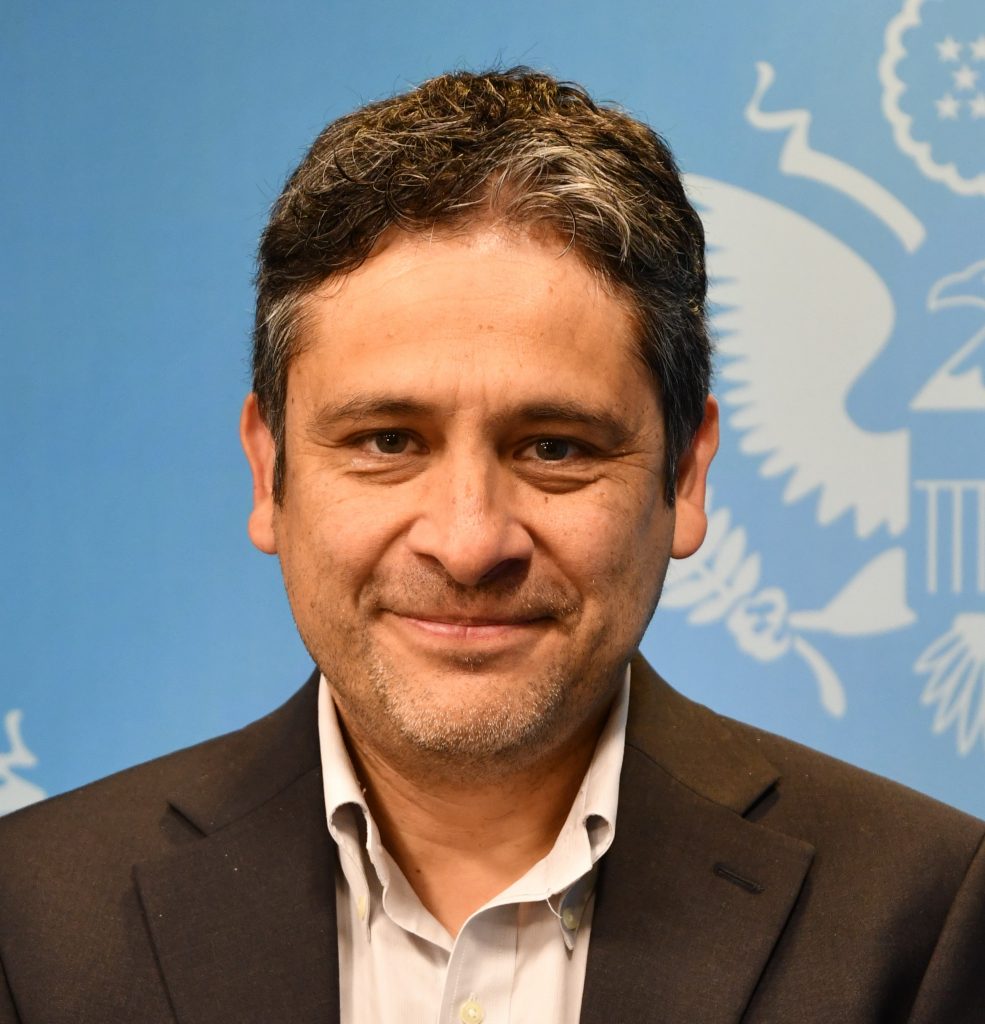
Oscar Avila has served since 2025 as Deputy Public Affairs Officer at the U.S. Embassy in Zagreb. His previous Foreign Service assignments were in Latvia, Iceland, Taiwan, and Costa Rica. Before joining the State Department, Oscar worked as a journalist and correspondent in Chicago, Kansas City, and Mexico City.
Originally from Kansas, he earned a degree in international relations from George Washington University.
Andreas Capstack
First Secretary/ Head of Political, British Embassy Zagreb

Andreas has served at the British Embassy in Zagreb since 2022 as First Secretary/ Head of Political. Previously, he worked as a Research Analyst on EU affairs at the Foreign, Commonwealth and Development Office in London, and before that in Brussels at the NATO Headquarters and the European Commission.
He holds Master’s degrees from the University of Chicago and Sciences Po Paris, and a BA from Oxford University.
Wendy Dorman-Smith
Ambassador of Ireland to Croatia
Wendy Dorman-Smith presented credentials to President Zoran Milanović on 3 September 2024, becoming the fourth resident Irish Ambassador to the Republic of Croatia.
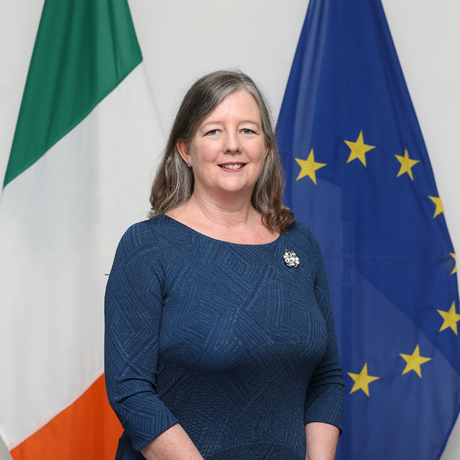
Ambassador Dorman-Smith joined the Department of Foreign Affairs in 2002 and has served in Mozambique, Brazil, the United Arab Emirates, and Hungary, as well as terms at HQ. Most recently (2020-2024), she has served as Consul General of Ireland in Shanghai, China.
She is from Sligo, on the Wild Atlantic Way, and graduated from NUI Galway.
Don Markušić
Don Markušić is the first Australian and UK-qualified lawyer admitted to the Croatian Bar. Based in Zagreb, he specialises in property, probate, company law, litigation, and arbitration, and is known for landmark cases. He has also contributed to Croatia’s legislative and institutional development, serving on the Croatian Parliament’s Legislative Committee and the Committee for Croats Abroad, and advising Croatian and foreign governments, including Ukraine and Kosovo, on legal reform.
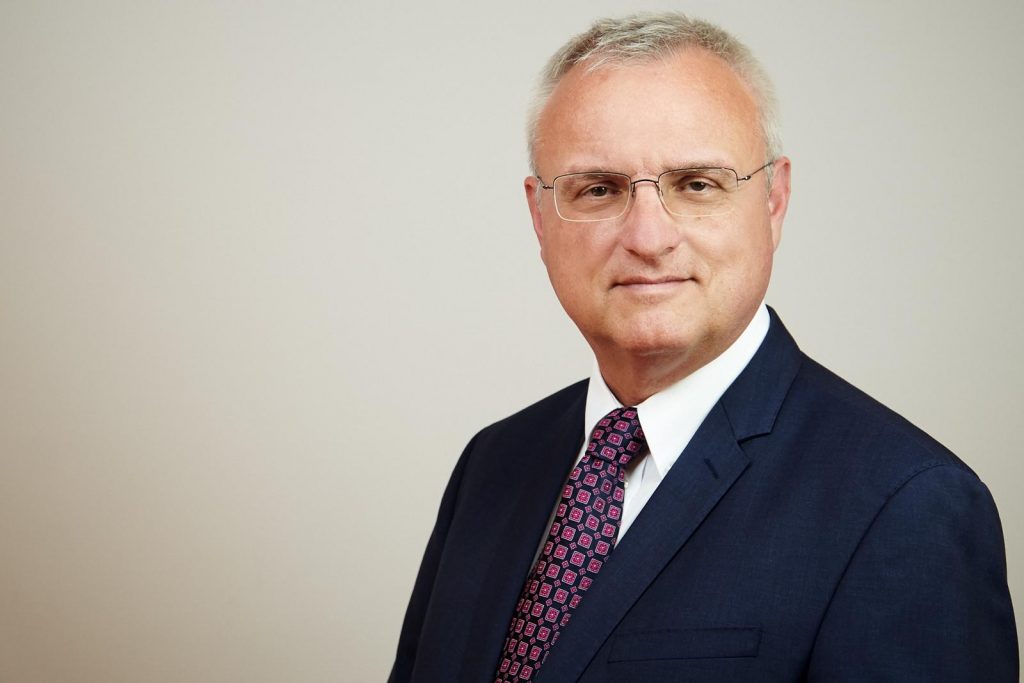
Don is President of the ACAP Zagreb Chapter and a member of the ACAP Board of Directors in the United States. He co-founded One Croatia, a global network of 33 Croatian organisations supporting humanitarian and business initiatives.
He has served as Vice President of Transparency International Croatia and the Croatian Helsinki Committee for Human Rights, is a member of the Society of the Brethren of the Croatian Dragon, an honorary member of the Glina War Veterans Association, and lectures at the Diplomatic Academy of the Croatian Ministry of Foreign and European Affairs.
Richard Mason Rodgers
Ambassador of Australia to Croatia
Ambassador Rodgers is a career officer with DFAT and was last Director, Afghanistan Political and Central Asia Section.

He has previously served overseas as Chargé d’Affaires, Interim Mission on Afghanistan, Doha, Chargé d’Affaires/Deputy Head of Mission, Australian Embassy, Kabul (2020-2021); Counsellor (Political), Australian Embassy, Manila (2014-2017); First Secretary, Australian High Commission, Dhaka (2005-2008); and Third, then Second Secretary, Australian High Commission, Singapore (1999-2002).
In Canberra, he served with DFAT as Director, United Nations Political, Commonwealth and Candidacies Section (2017-2020); Director, Space and Strategic Policy Section (2013-2014); Director, Indonesia Economic and Timor-Leste Section (2010-2013); and Assistant Director, People Smuggling, Refugees and Immigration Section (2008-2010). Mr Rodgers holds a Master of International Affairs from the Australian National University (2004) and a Bachelor of Arts (Honours) from the University of Adelaide (1990).
Richard M. Milburn
Defence Attaché to Croatia and Hungary, British Embassy Zagreb

Wing Commander Rich Milburn joined the Royal Air Force in 1998 following the completion of a bachelor’s degree in law at the University of Durham. He trained as a fighter controller and deployed to the Falkland Islands, Iraq and Afghanistan over the next 12 years controlling aircraft all around the world. Following two tours as a test and evaluation officer for Intelligence, Surveillance and Reconnaissance equipment, he was sent to Poggio Renatico in Northern Italy to work with NATO at the Deployable Command and Control Centre.
Prior to his appointment as the UK Defence Attaché to Croatia and Hungary, Milburn spent 10 years studying and teaching in both the US and the UK. He holds 3 master’s degrees and a PhD in military strategy. Milburn is the author of several published articles and a recent biography of the World War Two leader of the Royal Air Force, Sir Charles Portal. His Croatian is terrible, but his English is much better!
David McCallam
David McCallam is Reader in French and Francophone Studies in the Arts and Humanities Faculty, University of Sheffield, UK, and is a Fellow of the British Academy. In 2022, he was made a Chevalier dans l’Ordre des Palmes Académiques by the French State for services to French culture.

He has published widely on eighteenth- and nineteenth-century French and European culture. His most recent books include the ecocritical work, Volcanoes in Eighteenth-Century Europe: An Essay in Environmental Humanities (2019) and André Chénier: Poetry and Revolution 1792-1794 (2021), a critical study and new translation of the poet’s last works.
He is also a prize-winning translator of contemporary French poetry into English and a writer of short stories in both English and French, most recently winning second prize in the ‘Francophonie’ category of the Concours de Nouvelles Avancées 2025.
Harry Walker

Harry Walker is an Associate Professor in the Department of Anthropology at the London School of Economics and Political Science. He carries out research with indigenous peoples of the Amazon basin, and has published on topics including egalitarianism, happiness, shamanism, justice, and the role of emotions in everyday life.
He has recently begun a new project on perceptions of unfairness in Croatian society.
Lobel Filipić
Celebrating passion for English